
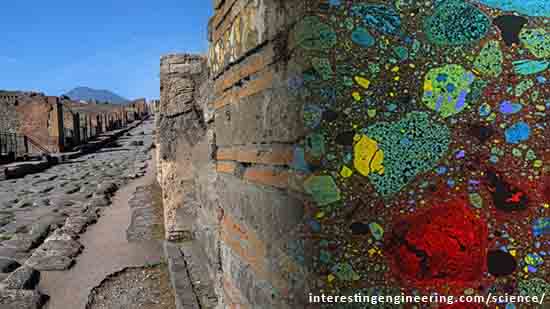
Roman concrete has stood the test of time. While its modern counterpart starts to crumble after only a few decades, Roman construction such as the Pantheon, roads, ports and aquaducts are still in use centuries after they were first built. The secret to the ancient concrete’s enduring capability has left many scratching their heads for over 1500 years.
The formula to make Roman concrete was long thought to involve mixing slaked lime with volcanic ash and water. However, it couldn’t account for small millimeter-sized white anomalies called ‘limeclasts’ that were present. Experts dismissed this as the product of poor concrete mixes. However, MIT Professor Masic realised there must be something more to them.
Based on his work studying 2000 year old Roman concrete samples, his team came up with a new formula. They tried a different form of lime called quicklime and ‘hot mixing’ or heating ingredients before combining them. They found this method led to rapid cooling of the concrete allowing for faster construction and, most importantly, limeclast production.
To better understand the differences, they compared concrete made using quicklime and non-quicklime methods. After cracking the concrete samples, they poured water through them. Unlike the non-quicklime variety which remained as is, the quicklime variety healed within two weeks. The water reacted with limeclasts in the quicklime concrete to form crystals filling the gaps meaning the concrete ‘self-heals’. As an added bonus, the water also reacted with volcanic ash to strengthen the material.
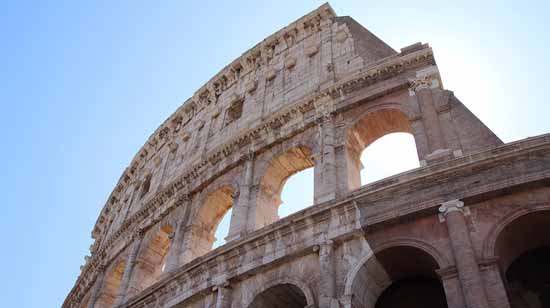
Scientists including Professor Masic are working to use these insights in modern construction as a sustainable alternative. “This material can heal itself over thousands of years, it is reactive, and it is highly dynamic. It has survived earthquakes and volcanoes. It has endured under the sea and survived degradation from the elements,” Professor Masic explains. Its application into present and future construction shows just how the old can become new again and remain strong for centuries to come.