
Oodi Library, in Norway’s capital Helsinki, has become something of a cornerstone in the local community. Built on the ideas, tips and dreams of the city’s residents, it won the world’s best newly built library award in 2019 and has something for everyone with spaces to record music, use a sewing machine, a 3D printer, a multi-purpose hall and even play basketball.
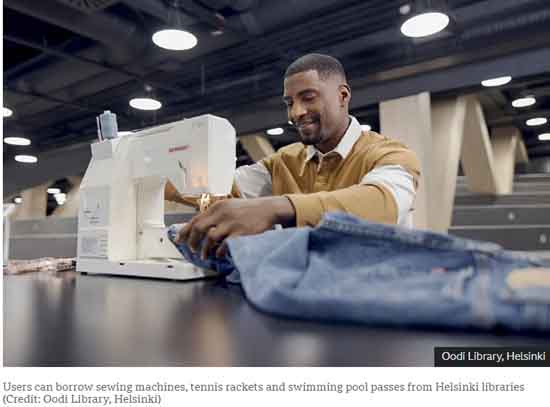
The idea of an expanded library finds its roots in Finland’s rural past. Back then, farming machinery would often be shared rather than bought new if it wasn’t used often. “Today, many people in cities live in small homes, and they might need a sewing machine only once a year,” explains Katri Vänttinen, Director of Library Services for Helsinki. “People prefer not to spend their own money when they can access a sewing machine for free, funded through their taxes.”
Guided by the Finnish Government’s Public Library Act which says libraries must promote democracy, freedom of expression and active citizenship, Oodi Library was co-designed with the public on its look, functionality, services and spaces. It’s become a crucial part of the public infrastructure leading to an unexpectedly high level of engagement. Within a month of opening, more than 5000 books were being checked out every day leading to shortages. Within a year, it received more than two million visitors more than doubling its expectations. While on average, an Australian may use the library 3.2 times a year, in Finland 55% of the population visit at least once a month highlighting just how engaged they are.
On top of these numbers, for many users their connection with libraries goes well beyond the routine. Nasima Razymar, a former Afghan refugee turned Member of Parliament in Finland, was helped by librarians with her homework as a newly arrived eight year old at a time her parents couldn’t speak the language. On getting her first library card she said, “When I signed my name and received it, I suddenly felt this place belonged to me.” Oodi Library administrators call it a ‘living room’ for anyone who needs it but many would likely have found a sense of belonging as well.