
The Galapagos Islands are world famous for being the inspiration for Charles Darwin’s theory of evolution. In 1835, a then 26 year old Darwin observed that finches had beaks that varied across the islands depending on local conditions and food sources. The Galapagos Islands play host to some of the most unique ecosystems in the world with much of their environment now protected for research and through conservation efforts. This makes them a veritable mine of fun facts and we’ve put together some of the most interesting together for you:
1. Entry into the Galapagos National Park, which covers 97% of the islands land mass costs $200 USD, and the surrounding waters are also protected as part of a marine reserve.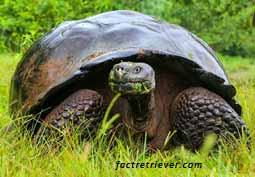
2. The Galapagos giant tortoise live for well over a century. They are the longest living land vertebrate. They can also survive up to one year without food or water. This unique characteristic also led them to be captured and stored for fresh meat by sailors which led to the devastation of the population.
3. The islands were discovered by accident by a Spanish bishop Tomás de Berlanga whose ship was blown off course in 1535. He described the islands to the King of Spain as “dross, worthless, because it has not the power of raising a little grass, but only some thistles.”

4. A floating post office dating back to the 18th century is used to deliver thousands of letters to the mainland. Dating back to the 18th century, a simple wooden barrel was used to store letters which was collected by mainland-bound seamen to deliver by hand. The tradition continues to this day.
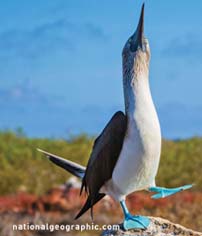
5. Boobies, the most popular seabirds, have developed distinctive behaviours that can be elicited by the colour of their webbed feet. Red-footed boobies use the branches of trees and bushes for nesting and are the smallest of the trio. Their blue-footed cousins and Nazca boobies nest along the ground. Blue-footed boobies flaunt their feet to attract mates and the Nazca booby has a white plumage with black-tipped feathers. Their distinctive diets are responsible for the pigmentation of their feet.